

The best home charger for a Tesla is a Level 2 charger with a native NACS connector — it plugs straight into your Model 3, Y, S, X or Cybertruck with no adapter. A 48A unit delivers the full 11.5 kW your Tesla accepts (~37–44 mi/hr); a 40A plug-in is the simpler install. Skip the J1772-plus-adapter route unless you already own one. EVIQO’s NACS chargers cover both.
If you own a Tesla — or just bought one of the new Ford, GM, Rivian, or Hyundai EVs that adopted Tesla’s plug in 2025 — your home charging options just got more interesting. The good news: there are now three legitimate paths to fast home charging. The challenging news: each has tradeoffs that aren’t obvious until you’ve lived with them.
This guide walks through all three options for charging a Tesla at home in 2026, with the real-world speed, cost, and reliability comparisons we wish someone had given us before we bought.
The state of Tesla home charging in 2026

A Tesla charging at home on a Level 2 NACS charger.
Three years ago, charging a Tesla at home meant exactly one thing: buy Tesla’s Wall Connector or use the Mobile Connector that came with your car, plugged into a NEMA 14-50. Third-party chargers required an adapter, and the adapter was clunky.
That’s changed completely. As of mid-2026:
- Tesla’s connector (NACS / SAE J3400) is now a published standard, openly licensed and supported by most major EV brands
- Third-party Level 2 chargers ship with native NACS connectors — no adapter required, plug straight into a Tesla
- Ford, GM, Rivian, and Hyundai have switched their new EVs to NACS connectors (timing varies by model year)
- The Tesla J1772 adapter still exists, but is now optional — only useful if you bought a J1772 charger before NACS adoption
For new buyers in 2026, the question has shifted from “is there an alternative to Tesla’s charger?” to “which of three legitimate options is right for me?”
Let’s compare them.
What NACS actually changes

Native NACS plugs in directly — no adapter step.
For a decade, the EV charging world ran on two AC standards:
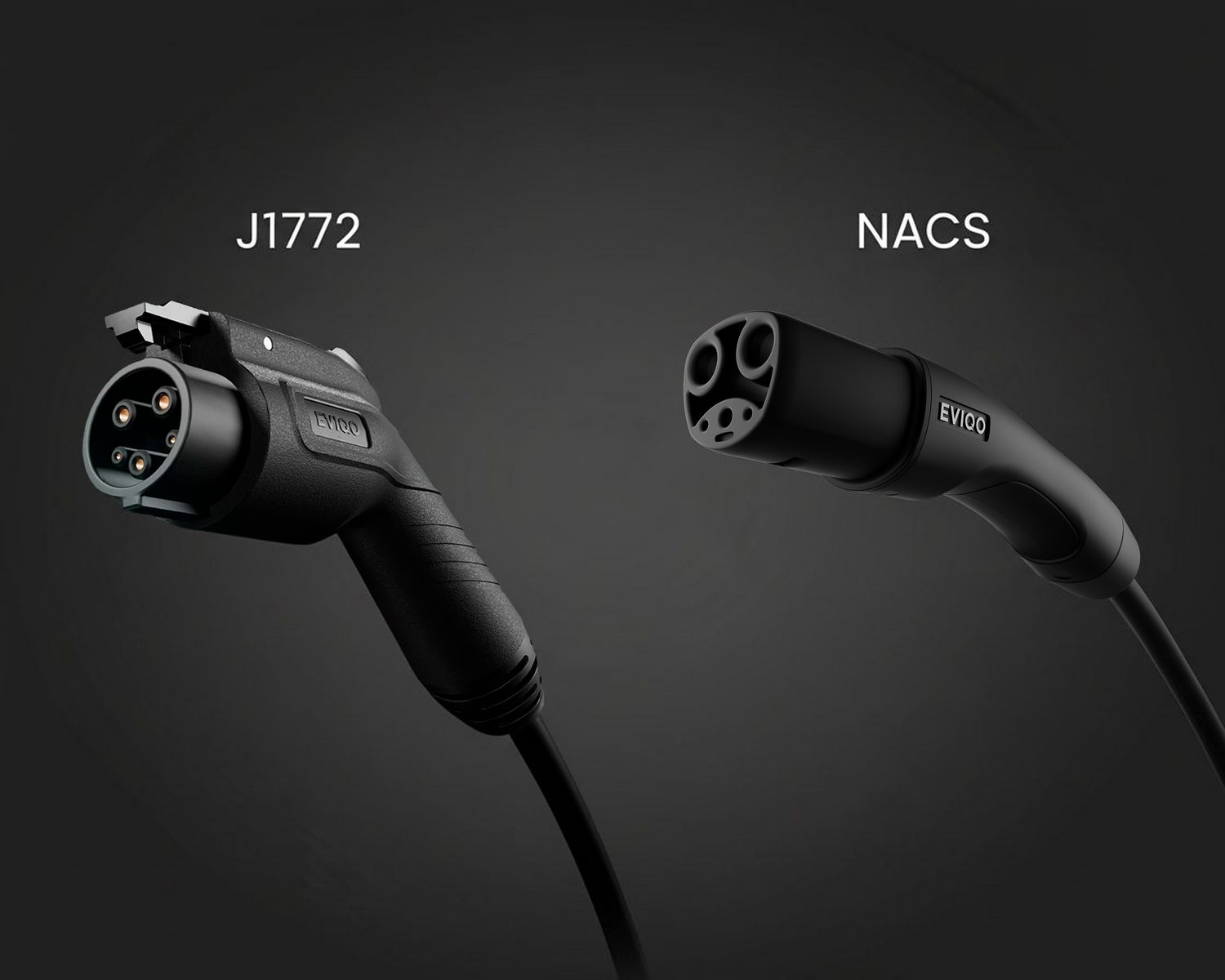
- J1772 (SAE J1772) — universal for all non-Tesla EVs in North America. Big, rugged, uses an external locking mechanism, used on every Chevy Bolt, Nissan Leaf, Ford Mach-E, etc.
- Tesla proprietary (now standardized as NACS / SAE J3400) — smaller, lighter, used only on Tesla vehicles, locking mechanism is inside the car.
Tesla’s connector was always physically superior — about 40% smaller, easier to handle, less prone to mechanical wear. The only reason it didn’t dominate was that Tesla kept it proprietary.
In 2023, Tesla opened the spec. In 2024–2025, every major automaker announced they were switching. By model year 2025, Ford F-150 Lightning, Mustang Mach-E, GM Silverado EV, Equinox EV, Hyundai Ioniq 5, Kia EV6, Rivian R1T/R1S, and others had shipped with NACS connectors.
The implications for home charging:
- NACS is now the default new connector standard. If you’re shopping for a charger today, NACS-equipped models are the future-proof choice for any modern EV.
- You no longer need an adapter to charge a Tesla on a third-party charger — if that charger has a native NACS plug.
- J1772 isn’t going away. Existing J1772 EVs (everything pre-2025 except Tesla, plus some 2025–2026 holdouts) will continue using J1772 indefinitely. Adapters between NACS and J1772 work in both directions.
The practical takeaway: NACS = compatible with Tesla + post-2025 Ford/GM/Rivian/Hyundai. J1772 = compatible with everything else from the last decade.
Option 1: Native NACS Level 2 charger (the new standard)
This is what you want if you own a Tesla today and aren’t planning to also charge a non-NACS EV.
How it works
A Level 2 EV charger with a native NACS connector. Plug directly into your Tesla — no adapter, no awkward extensions, no extra step. Some models offer both NEMA 14-50 plug-in versions (40A) and hardwired versions (48A).
Pros
- No adapter. You’re not carrying around a metal connector hub between your Tesla and your charger. Cleaner setup, cleaner cable management.
- Faster real-world charging. Most adapter setups add 2–4% resistance loss; native NACS connections don’t.
- Same EV charger works for current and future EVs. If you also have or will get a Ford Lightning, GM Silverado EV, or Rivian R1T (all NACS-equipped from MY2025+), one charger handles them all.
- Cleaner install. No adapter dongling from the connector when plugged into the car.
- Higher reliability. Adapter connections introduce two mating surfaces instead of one — twice the potential failure points.
Cons
- Doesn’t charge non-NACS EVs without an adapter going the other way. If your family also has a Chevy Bolt or older Mach-E with J1772, you’d need a NACS-to-J1772 adapter (about $230 from Tesla, $180–$240 from third parties).
- Slightly higher upfront cost. NACS-native chargers are typically $20–$50 more than J1772 equivalents.
Real cost (2026)
| Charger type | Typical price range |
|---|---|
| Plug-in NACS 40A (NEMA 14-50) | $379–$549 |
| Hardwired NACS 48A | $399–$649 |
| Add: NEMA 14-50 install | $400–$900 |
| Add: Hardwired install | $600–$1,400 |
The EVIQO NACS 48A Hardwired charger is one of the few hardwired NACS units rated for 48A continuous with NEMA 4 / IP66 outdoor weatherproofing.
Browse EVIQO NACS / Tesla-compatible chargers →
Option 2: J1772 charger + Tesla adapter (the legacy setup)
This is what most current Tesla owners have. You bought a J1772 charger sometime in 2021–2024, plus the Tesla J1772-to-NACS adapter that ships with every Tesla. It works fine, but it’s not the cleanest setup.
How it works
Standard J1772 Level 2 charger mounted on your wall. When you want to charge, you plug the J1772 connector into the Tesla J1772 adapter (which lives in your charger holster or your Tesla’s frunk), then plug that adapter into your Tesla’s NACS port.
Pros
- Charger works with all EVs (with right adapter on the connector). Charge a Tesla today, a Bolt tomorrow, a Ford Lightning the day after.
- Adapter is included free with every new Tesla — no extra purchase needed.
- Existing J1772 home installs work immediately. No retrofit if you already have one.
- Massive selection. J1772 chargers have been on the market for 10+ years. Tons of options at every price point.
Cons
- Adapter hangs off the cable. Cosmetically ugly, mechanically vulnerable — drops, twists, knocks.
- Daily handling. You’re swapping the adapter on/off if you also have a non-Tesla EV in the household.
- Slight efficiency loss. Adapter contact resistance loses 2–4% of charging power. Over a 10-year charger life, that adds up.
- Adapter can fail. Tesla adapters generally hold up well, but third-party adapters of varying quality have caused damage to charger ports. Buy Tesla OEM or wait for the supply situation to improve.
- Not future-proof. Buying a brand-new J1772 charger in mid-2026 for a Tesla is buying yesterday’s connector for today’s EV. The smarter long-term decision is NACS native.
Real cost (2026)
| Component | Typical cost |
|---|---|
| New J1772 charger (mid-tier) | $329–$549 |
| Tesla J1772-to-NACS adapter | $230 (Tesla retail) — usually included with new Tesla |
| Install (NEMA 14-50 or hardwired) | $400–$1,400 |
If you already own a J1772 charger and a Tesla, keep using this setup until something breaks — it’s working fine. But if you’re buying new equipment today, NACS native is the better choice.
Option 3: Tesla Wall Connector (Tesla’s official option)
The Tesla Wall Connector is Tesla’s first-party home charger. Hardwired (no plug version), 48A capable, with native NACS connector, includes Tesla-specific app integration and works on Tesla’s own Powerwall + solar ecosystem.
How it works
Mounted on the wall, hardwired into your panel, plugged into your Tesla via native NACS. Connects to Tesla’s app for charge scheduling and stats.
Pros
- First-party Tesla integration. Best smartphone app integration, deepest Tesla ecosystem support, works smoothly with Tesla solar.
- Premium aesthetics. Looks great on a wall. Apple-level industrial design.
- 24-foot cable (longer than most third-party options).
- Reliable performance. Tesla’s reputation for hardware quality is well-earned.
Cons
- NACS-only. Won’t natively charge any non-Tesla EV. You’d need a separate setup for a Bolt, Mach-E, etc.
- Higher upfront cost. Tesla Wall Connector is $475 in 2026 vs $400–$450 for comparable hardwired NACS third-party chargers.
- Hardwired only — no NEMA 14-50 plug-in version. If you rent or might move, this is a worse choice.
- Locked into Tesla’s ecosystem. App, scheduling, integration all tie to Tesla. If you switch EV brands later, you may want different software.
Real cost (2026)
| Component | Cost |
|---|---|
| Tesla Wall Connector (charger) | $475 |
| Hardwired install (Tesla’s preferred) | $600–$1,400 |
| Total | $1,075–$1,875 |
The Tesla Wall Connector is genuinely a great product. The question is whether the Tesla-ecosystem premium is worth $50–$100 over equivalent third-party NACS hardwired units that don’t lock you in.
Speed comparison: charging a Model Y from 20% to 80%
Let’s compare real-world charging times for a 2026 Tesla Model Y Long Range (75 kWh battery, ~330 mile range).
| Setup | Max amperage | Power | Time 20% → 80% | Notes |
|---|---|---|---|---|
| Tesla Mobile Connector + NEMA 14-50 | 32A | 7.7 kW | ~5.8 hours | What ships with the car — slow |
| J1772 40A + Tesla adapter | 40A (limited by NEMA 14-50) | 9.6 kW | ~4.7 hours | Adapter loses ~3% efficiency |
| Native NACS 40A plug-in (EVIQO) | 40A | 9.6 kW | ~4.6 hours | Same as above, no adapter loss |
| Native NACS 48A hardwired (EVIQO) | 48A | 11.5 kW | ~3.8 hours | The faster realistic home charging |
| Tesla Wall Connector (48A) | 48A | 11.5 kW | ~3.8 hours | Tied with EVIQO 48A — connector is identical |
| DC Fast Charging (250 kW) | n/a | 150–250 kW | 25 minutes | Not realistic for daily home use |
The standout: going from 7.7 kW (Mobile Connector) to 11.5 kW (48A hardwired) saves you about 2 hours per charging session, every time. If you charge daily, that’s 2 hours of additional EV availability — quietly significant.
The Mobile Connector that came with your Tesla works, but it’s not the best home setup. Most Tesla owners upgrade to a wall-mounted Level 2 charger within the first 6 months.
Cost comparison: equipment + installation
Total cost-of-ownership for the first 5 years.
| Setup | Year 1 cost | Year 5 cost | Notes |
|---|---|---|---|
| Tesla Mobile Connector + new NEMA 14-50 outlet | $300 (outlet only) | $300 | Slowest charging, frustrating in winter or back-to-back days |
| J1772 40A charger + Tesla adapter + NEMA 14-50 install | $650–$1,400 | $900–$1,600 | Future swap if you change EV brands |
| NACS 40A plug-in + NEMA 14-50 install | $750–$1,450 | $750–$1,450 | Clean, no adapter, future-proof |
| NACS 48A hardwired + hardwire install | $1,000–$2,050 | $1,000–$2,050 | Fastest, most reliable, most expensive |
| Tesla Wall Connector + hardwire install | $1,075–$1,875 | $1,075–$1,875 | Premium Tesla integration, locked-in ecosystem |
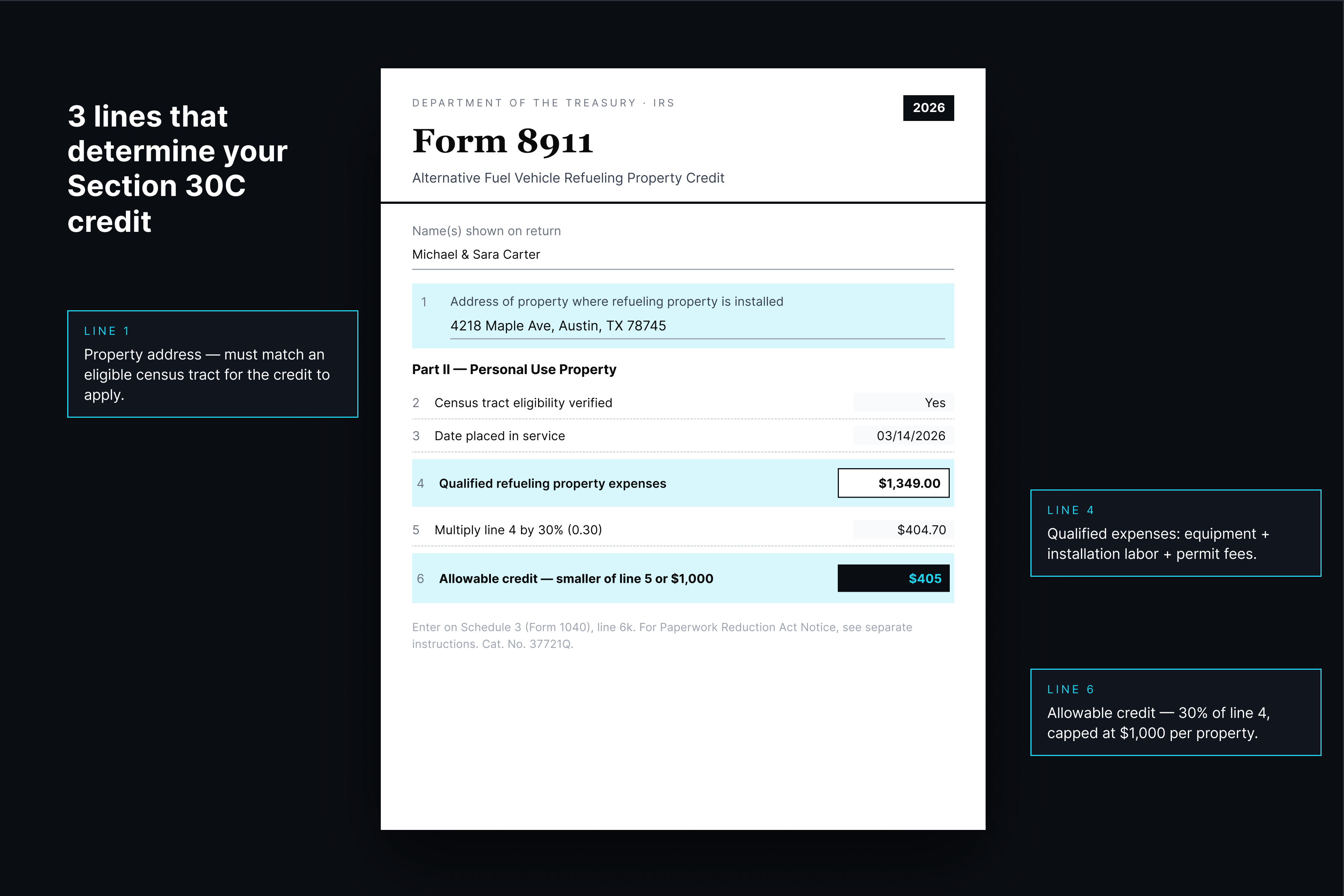
After the federal Section 30C tax credit (30% up to $1,000), most installations end up $300–$700 lower than the sticker price. See our tax credit guide for details.
The future-proofing question: which EVs use NACS now?

Major EV brands adopting the NACS standard in 2026.
If you’re investing in a charger today and expect to keep it 8+ years, here’s what your future garage might look like.
EVs already on NACS (model year 2025+):
- All Teslas (Model 3, Model Y, Model S, Model X, Cybertruck)
- Ford F-150 Lightning (MY2025+)
- Ford Mustang Mach-E (MY2025+)
- Ford Explorer EV (MY2025+)
- GM Silverado EV (MY2025+)
- GM Equinox EV (MY2025+)
- GM Blazer EV (MY2025+)
- GMC Sierra EV (MY2025+)
- Hyundai Ioniq 5 / Ioniq 6 / Ioniq 9 (MY2025+)
- Kia EV6 / EV9 (MY2025+)
- Rivian R1T / R1S (MY2025+)
- Polestar 3 (MY2025+)
- Mercedes EQ models (transitioning during 2026)
- BMW iX, i4, i5, i7 (transitioning during 2026)
EVs staying on J1772 (most pre-2025 models, plus:):
- Toyota bZ4X
- Subaru Solterra
- Mazda MX-30 (limited US market)
- Lucid Air (J1772 for now, NACS transition planned)
- Volkswagen ID.4 (transitioning later)
- Volvo XC40 Recharge (transitioning later)
The migration math:
If you own a Tesla and your spouse has a Ford Lightning MY2024 (J1772), buying a NACS charger means a $200 adapter is needed for one of the vehicles. If you own a Tesla and your spouse plans to buy a 2026+ EV, buying NACS native covers both vehicles without adapters from day one.
For most American households planning an EV upgrade in the next 5 years, NACS native is the better long-term bet — but check your specific situation.
Smart features that matter more than connector type
Once you’ve picked your connector, the differentiators between chargers are mostly about smart software. The right features can save you $100+ per month vs. a “dumb” charger.
Scheduling (must-have)
Charge during off-peak utility hours (typically 11 PM – 7 AM). Most utilities offer rates 50–70% lower at off-peak. A smart EV charger that automatically starts at off-peak time pays for itself in 6–12 months for most owners.
App control
Start/stop charging from your phone. See actual energy used (kWh) and cost. Monitor for unusual activity. Most decent chargers in 2026 have this. The EVIQO app handles WiFi setup, scheduling, energy tracking, and firmware updates from one interface — supports both Gen 1 and Gen 2 chargers.
Energy monitoring
Tracks kWh used over time. Useful for: - Calculating exact charging cost per month - Reporting EV expenses for tax purposes (Section 30C audit support) - Tracking solar self-consumption (if you have rooftop solar)
OCPP compatibility
Open Charge Point Protocol — an industry standard that lets your charger work with third-party apps and load management systems. If you ever want to add a second charger, energy storage, or sell back to the utility, OCPP makes that possible. Most Tesla Wall Connectors are NOT OCPP-compliant; most EVIQO and other third-party chargers ARE.
Power adjustment
Some chargers let you dial down power (e.g., from 48A to 32A) via the app, which is useful for: - Charging multiple EVs from a shared 60A circuit - Avoiding panel overload during peak family usage - Slow-charging a battery that’s nearly full
Installation requirements specific to NACS chargers
NACS chargers work with the same electrical infrastructure as J1772 chargers — the connector type doesn’t change the install requirements. What matters:
Same as J1772 setups
- Dedicated 240V circuit
- Properly sized breaker (50A for 40A plug-in, 60A for 48A hardwired)
- Wire gauge: 6 AWG (40A) or 4 AWG (48A) copper
- Proper grounding
- GFCI protection where required by NEC code (mostly outdoor NEMA 14-50)
Minor differences
- Connector locking: NACS connectors lock at the vehicle, not the charger. This means the charger holster typically has a simpler “rest” cradle vs J1772 which often has a magnetic dock.
- Cable management: NACS connectors are about 40% smaller and lighter than J1772, making cable management easier in tight spaces.
- Wire termination: For hardwired NACS units, the internal wiring is functionally identical to J1772 — no electrician-specific concerns.
For a deep dive into NEMA 14-50 vs hardwired installation differences, see our installation type guide.
Common myths about Tesla home charging
Myth 1: “Tesla cars must use Tesla chargers”
Wrong. Tesla EVs are perfectly compatible with any NACS-equipped charger (and J1772 chargers with a Tesla adapter). Tesla doesn’t sell you a charger when you buy the car — you choose.
Myth 2: “Third-party chargers are slower than Tesla’s”
Wrong. A 48A third-party NACS charger and the 48A Tesla Wall Connector deliver identical power. Your Tesla negotiates with whatever charger it’s plugged into via standard protocols — speed is determined by the charger’s rated amperage and your home’s electrical service, not the brand.
Myth 3: “I need to use Tesla’s Mobile Connector at home”
Functional but slow. The Mobile Connector that ships with your Tesla is rated for 32A maximum (about 7.7 kW). A dedicated home Level 2 charger at 40A–48A is 25–50% faster and includes scheduling, app control, and energy monitoring. Most Tesla owners upgrade within their first 6 months.
Myth 4: “NACS adapters damage your car’s port”
Wrong, with caveats. Tesla’s OEM NACS adapter is rigorously tested and warranty-covered. Cheap third-party NACS adapters from no-name brands have caused documented damage to charger ports. Buy adapter from Tesla or established manufacturers (Lectron, Setec). Avoid generic Amazon-only listings.
Myth 5: “I need 100-amp service to install a home charger”
Wrong. Most Level 2 home chargers work fine on 100-amp service, especially the 40A plug-in versions. You need 200A service if you want maximum capacity for future EV upgrades or solar batteries, but the existing 100A is fine for a single 40–48A charger.
Myth 6: “Hardwired NACS chargers are only for newer homes”
Wrong. Hardwired NACS chargers work on any home that has a modern electrical panel (1990s+). Older homes may need panel upgrades, but the charger itself doesn’t care.
Frequently asked questions
Can I use the same NACS charger for my Tesla and my new 2025+ Ford Lightning?
Yes. Both vehicles use the NACS connector natively as of MY2025. A single NACS charger handles both without any adapter.
Will a J1772 adapter work both ways — for both Tesla cars and non-Tesla EVs?
Not exactly. The Tesla J1772 adapter goes ON the J1772 plug to convert it to NACS for your Tesla. To go the OTHER way (NACS charger → J1772 car), you need a NACS-to-J1772 adapter, which is a different product. As of 2026, NACS-to-J1772 adapters are available from $180–$280 from major brands.
Does it matter which NACS charger I buy?
Yes — focus on amperage rating (40A vs 48A), cable length (25-foot is standard EVIQO; some brands offer 20 or 18 feet), outdoor weatherproofing (NEMA 4 / IP66 if you’ll install outdoors), and smart features (WiFi, scheduling, app). Brand reputation matters for long-term reliability.
Is the Tesla Wall Connector worth the extra money?
If you exclusively own Teslas and want deep Tesla ecosystem integration, yes. If you have or might have non-Tesla EVs, or if you want a wider feature set (OCPP compatibility, advanced energy management), third-party NACS hardwired chargers offer comparable hardware at $40–$80 less.
Can I install a hardwired NACS charger outdoors?
Yes — but only if the charger is rated NEMA 4 or IP66. Most modern Level 2 chargers carry this rating, including EVIQO’s hardwired NACS models. Outdoor mounting requires weatherproof junction boxes and proper grounding per NEC 625 code.
Will buying a NACS native charger today still work if I switch to a different EV brand later?
Yes, as long as the new EV uses NACS (Tesla, Ford, GM, Rivian, Hyundai, Kia for MY2025+). If you switch to a brand that’s still on J1772 (Toyota bZ4X, Lucid Air for now), you’d need a NACS-to-J1772 adapter. The charger itself is fully reusable.
How long does it take to install a NACS charger?
NEMA 14-50 plug-in (40A): 2–4 hours of electrician time. Hardwired (48A): 3–5 hours. Add 1–2 weeks for permitting in most US municipalities.
Does my Tesla need any special configuration to work with a third-party NACS charger?
No. The charging protocol is standardized. Plug in, the car and charger negotiate, charging starts. The only adjustment you might make is in your Tesla’s mobile app: set a charging schedule, charging amperage limit, or location-based charging preference.
What’s the federal tax credit situation for NACS chargers specifically?
The Section 30C federal tax credit doesn’t distinguish between connector types. NACS or J1772 — both qualify for up to 30% of qualified expenses, capped at $1,000 residential. See our tax credit guide.
Can I charge other electric devices (not EVs) on a NACS charger?
No. NACS charger output is specifically formatted for EV charging protocols (J1772/NACS standard signal exchange). You can’t plug in a generator, RV, or anything else expecting standard 240V — the charger only activates when it detects a vehicle requesting power.
What about over-the-air firmware updates for NACS chargers?
Quality chargers (including EVIQO) support OTA firmware updates via WiFi. Updates fix bugs, add features, and sometimes improve charging speeds as protocol improvements are released. Tesla Wall Connector also supports OTA. Generic Amazon chargers usually don’t.
Are there reliability differences between NACS and J1772 chargers from third-party brands?
For chargers built in the last 3 years, no significant difference. Both technologies are mature. Connector reliability (the physical plug) is actually slightly better on NACS due to its smaller, lighter design — less wear and tear from daily handling.
Choosing the right NACS charger for your home
For most Tesla owners shopping for a charger in 2026, the question simplifies to:

EVIQO NACS Charger — 40A Plug-In (Tesla)
Plugs straight into your Tesla — no adapter. 9.6 kW, up to ~37 mi/hr via a NEMA 14-50 outlet. 25 ft cable, IP66, WiFi scheduling. Rated 4.96★.
$420.99$499.00Shop NACS Plug-In →

EVIQO NACS Charger — 48A Hardwired (Tesla)
Hardwired for the full 11.5 kW your Tesla accepts — up to ~44 mi/hr. Best for long commutes, Model S/X, and outdoor mounting. Rated 4.97★.
$429.99Shop NACS Hardwired →
- Renting or might move in 2–3 years? Get a NACS plug-in (40A NEMA 14-50) — portable, no permanent install commitment.
- Homeowner planning to stay 5+ years? Get a hardwired NACS 48A unit — faster, more reliable, better long-term value.
- Want maximum Tesla integration regardless of cost? Tesla Wall Connector remains a great choice (though third-party 48A units match it on speed).
EVIQO offers both NEMA 14-50 plug-in and hardwired NACS variants — same WiFi smart features (via the EVIQO app), same NEMA 4 / IP66 outdoor rating, same 3-year warranty. Browse the NACS / Tesla-compatible lineup →
For hardwired install, we partner with Treehouse Pro — flat-rate certified electrician installs in most US metros. See verified expert reviews → or browse the EVIQO Knowledge Base for installation FAQs.
Questions about which works best for your specific setup? Our team responds within 2 business hours: contact us.


Leave a comment
This site is protected by hCaptcha and the hCaptcha Privacy Policy and Terms of Service apply.