

Plug into any NEMA 14-50 outlet — fastest setup, movable, perfect for renters and homeowners alike

NEMA 14-50 Plug-In EV Chargers — 40A / 9.6 kW

A NEMA 14-50 plug-in charger is the most popular way to set up Level 2 home charging in the U.S. You install (or already have) a NEMA 14-50 outlet — the same outlet type used by RVs, electric stoves, and welders — then plug in the EVIQO charger and start charging. No hardwiring, no permanent commitment. Up to 40A / 9.6 kW — enough to fully charge most EVs overnight. Available in J1772 or NACS.

ETL ListedUL CompliantFCCEnergy Star

Filters

Sort by:

3 products

SALE
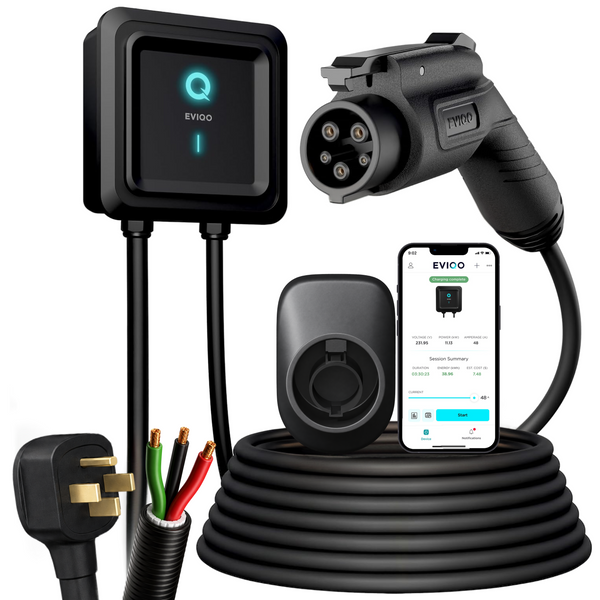
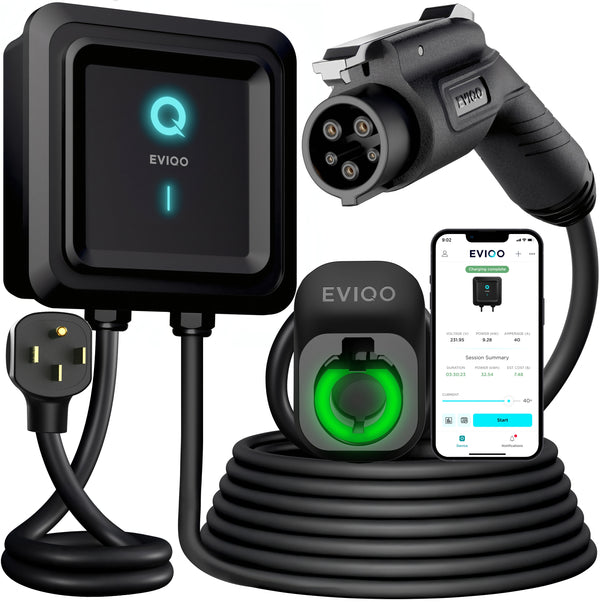
EVIQO Level 2 EV Charger, 40A (9.6kW), 240V, NEMA 14-50 Plug-in, J1772 for Non-Tesla EVs
$540.99
$440.99
SALE
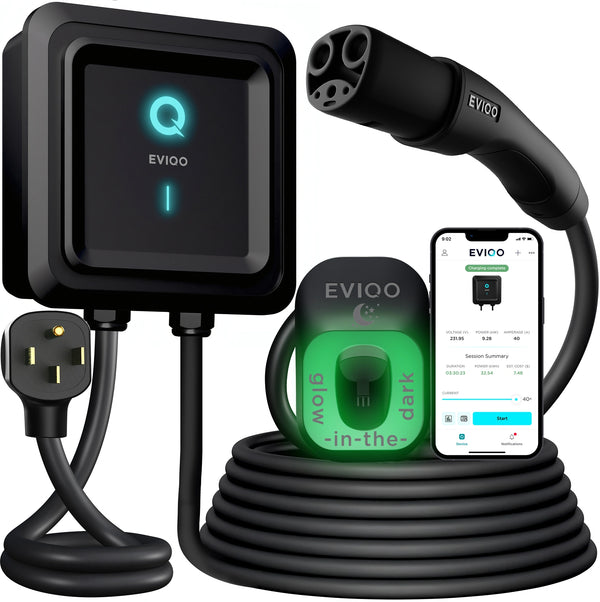
EVIQO NACS Level 2 EV Charger, 40A (9.6kW), 240V, NEMA 14-50 Plug In, for Tesla EVs
$510.00
$419.99
Why EVIQO

Built for everyday charging

  • 40A / 9.6 kW output Adds ~30–37 miles of range per hour
  • Plugs into any NEMA 14-50 outlet Same outlet used by RVs and electric stoves
  • Movable & rental-friendly Unplug and take with you when you relocate
  • No hardwiring required Just install the outlet (electrician), then plug in
  • 25 ft charging cable Reaches from garage corner to driveway
  • UL / ETL / FCC / Energy Star Rebate-eligible across U.S. utility programs
Side-by-side

Quick comparison

Model Generation Connector Amperage Cable Notes
Gen 1 J1772 Plug-In
Last Units — Clearance
Gen 1 J1772 40A → 48A 25 ft Gen 1 — last units
Gen 2 J1772 Plug-In
Most Popular
Gen 2 J1772 40A 25 ft Latest gen
Gen 2 NACS Plug-In
Tesla-Ready
Gen 2 NACS (Tesla) 40A 25 ft Latest gen

Prices in USD. Free shipping in the contiguous U.S. All units ETL Listed, FCC certified, Energy Star qualified.

Buying guide

NEMA 14-50 Plug-In Charger Buying Guide

What is NEMA 14-50?

NEMA 14-50 is the standard name for a 240V, 50-amp electrical outlet used across North America for high-power appliances — RVs, electric ranges, welders, and EV charging. It's a four-prong receptacle (two hots, one neutral, one ground) and is what every U.S. licensed electrician recognizes immediately. Most U.S. homes can have one installed for $300–$800 (depending on distance from the electrical panel and local rates).

Why choose plug-in over hardwired?

Flexibility: You can unplug and move the charger when you relocate — a hardwired unit stays with the house. Easier install: Once the outlet is installed (the only part that requires an electrician), you handle the charger yourself. Renter-friendly: Some landlords allow tenant-paid outlet installs that stay with the property. Trade-off: capped at 40A / 9.6 kW (vs 48A / 11.5 kW for hardwired) — but 40A is plenty for overnight charging on most EVs.

Will my dryer or stove outlet work?

Probably not. Dryers in the U.S. typically use a NEMA 14-30 (30-amp) outlet — that's a different plug shape and a lower-rated circuit. Some electric stoves use NEMA 14-50, but the circuit may be on a 40A breaker rather than the 50A required for the full 40A EVIQO output. Always have a licensed electrician verify the breaker, wire gauge, and outlet rating before plugging in. If your existing outlet is on a smaller circuit, EVIQO chargers can be dialed down to 24A or 32A to stay within safe limits.

What breaker do I need?

A 50A double-pole breaker is required for the full 40A continuous output (per the 80% rule). Wire size: typically 6 AWG copper for L1 + L2 + neutral, 10 AWG for ground. If you only have a 30A breaker available, set the EVIQO dial switch to position 1 and limit the app slider to 24A — still ~20 miles of range per hour.

How is it different from the EVSE cordset my car came with?

The cordset that ships with most new EVs (Tesla Mobile Connector, Ford Mobile Charger, etc.) is typically limited to 32A — about 7.7 kW. EVIQO plug-in chargers run at 40A — about 25% faster. They also add WiFi scheduling, real-time monitoring, household sharing, weatherproofing, and a permanent wall-mount with holster. Your mobile cordset becomes the backup.

Can the charging cable reach my car?

EVIQO plug-in chargers ship with a 25 ft charging cable (output side) and a ~36-inch input cable to the NEMA 14-50 plug. That's enough to reach across most two-car garages or out to a driveway. Pro tip: install the outlet on the wall closest to where you'll park, at about 48 inches off the floor, so the cable runs naturally to the car's charge port.

Explore more

Other ways to charge

FAQ

NEMA 14-50 Plug-In EV Charger — FAQ

What is a NEMA 14-50 outlet?

A 240V, 50-amp four-prong receptacle widely used in the U.S. for high-power appliances. Same outlet type as electric ranges, RV hookups, and welders. Recognized by every U.S. licensed electrician — easy to install.

How much does it cost to install a NEMA 14-50 outlet?

Typically $300–$800 for a residential install, depending on how far the outlet is from your electrical panel and local labor rates. Get 2–3 quotes from licensed electricians. Many U.S. states and utilities offer rebates that cover part or all of this cost — check eviqo.io/pages/rebates for programs by ZIP.

Can I plug it into my dryer outlet?

Most U.S. dryer outlets are NEMA 14-30 (30 amps) — a different plug shape and a smaller circuit. If you have a true NEMA 14-50 outlet on a 50A circuit (some electric stoves do), you can use it. If not, an electrician needs to install the right outlet. Don't use adapters to force-fit incompatible outlets — that's a fire risk.

Can I move the charger when I relocate?

Yes — that's a key advantage of the plug-in version. Unscrew the wall mount, unplug from the outlet, and the charger comes with you. Just make sure your next home has (or can have) a NEMA 14-50 outlet.

Is 40A enough?

For 95% of U.S. EV owners — yes. 40A / 9.6 kW adds about 30–37 miles of range per hour. Even a depleted 80 kWh battery (typical Model Y, Mach-E, Ioniq 5) fully recharges in about 9 hours — well within overnight. If you drive a heavy truck (F-150 Lightning, R1T, Silverado EV) and put 200+ miles on it daily, hardwired 48A makes a noticeable difference.

Do I need a GFCI breaker?

Many local codes require GFCI protection on the NEMA 14-50 outlet itself (not the charger). EVIQO chargers have integrated ground-fault protection internally, but the outlet still falls under NEC 625 — your electrician will know whether your jurisdiction requires GFCI at the breaker. Note: some GFCI breakers have nuisance-trip issues with EV chargers; the electrician may use a non-GFCI breaker on hardwired runs to avoid this.

Plug-in vs Hardwired — which should I pick?

Plug-in if: you rent, you might move, you want the easiest install, or you only need ~30 miles of range per hour. Hardwired if: you own the house, want maximum 48A / 11.5 kW, prefer the cleanest install with no visible outlet, or have a large EV that benefits from faster charging. Both are safe, UL/ETL certified, and rebate-eligible.

Is the plug-in version weatherproof?

The charger body is IP66 / NEMA 4 — rain, snow, and direct hose spray are fine. However: an outdoor NEMA 14-50 outlet requires a weatherproof in-use cover (your electrician handles this) and ideally GFCI protection. For outdoor installs in wet climates, many homeowners go with hardwired NACS or J1772 instead — no outlet to worry about.

Can I use an existing RV outlet?

If it's a true NEMA 14-50 on a 50A breaker — yes. Many RV pedestals do meet this spec. But have an electrician verify: (a) breaker is 50A, (b) wire gauge is 6 AWG, (c) the outlet is rated for continuous EV charging (some older receptacles are rated only for intermittent loads). If anything is undersized, dial the EVIQO down to match safely — or upgrade the circuit.

Does it work in cold weather?

Yes. EVIQO chargers are tested from -22°F to 122°F (-30°C to 50°C). The charger itself functions in extreme cold; your EV's battery acceptance rate may drop in sub-freezing temperatures, but that's a vehicle limitation, not the charger's.

Warranty?

3 years standard, no registration needed. Extendable to 4 years as a paid add-on at checkout. Support: support@eviqo.io with your order number.