What is J1772?
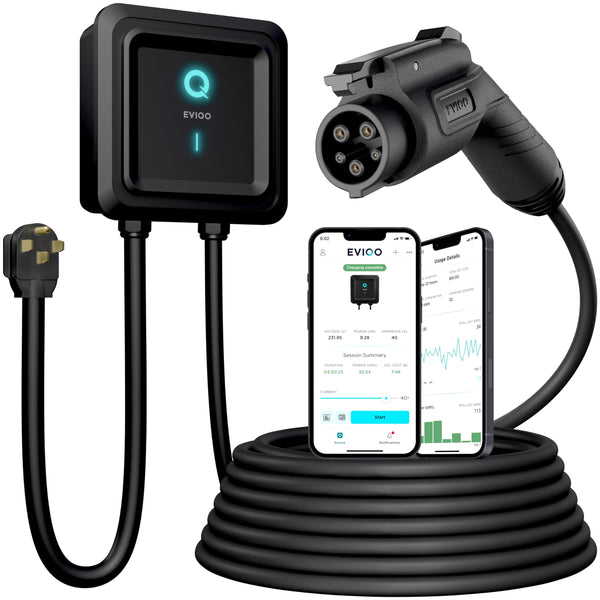
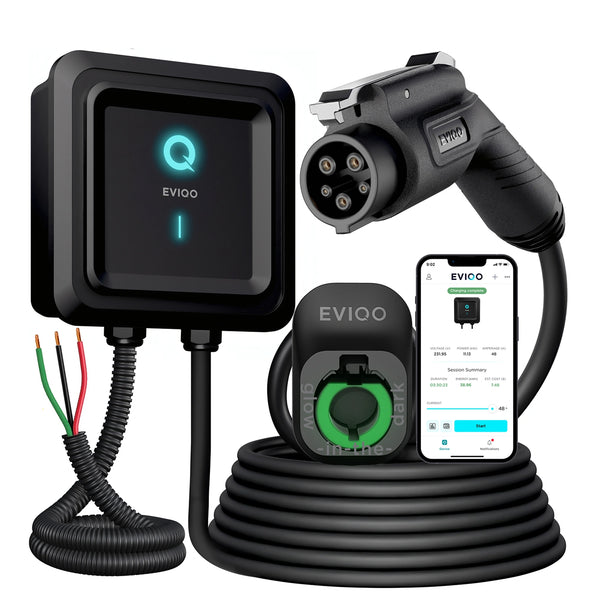
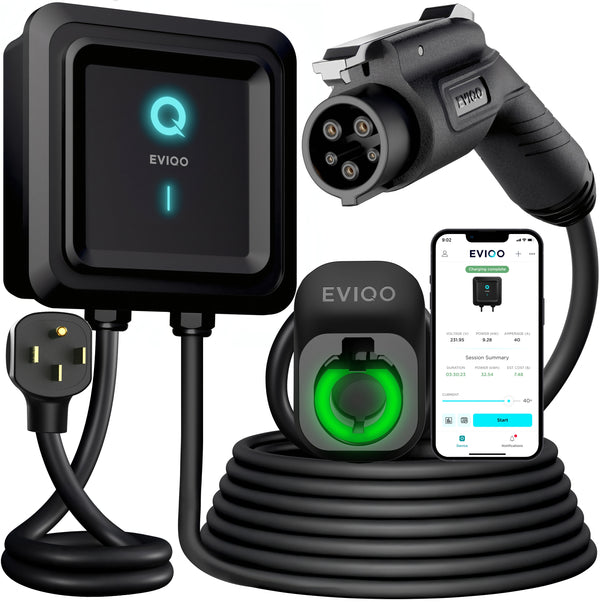
J1772 (also called SAE J1772 or 'Type 1') is the standard connector for Level 2, 240V AC home charging on most non-Tesla EVs in North America. It has been the common home-charging plug for over a decade. EVIQO J1772 chargers use this connector, so they plug straight into any J1772-equipped EV.
Which EVs use J1772?
Almost every non-Tesla EV and plug-in hybrid sold in North America through 2024: Ford, Chevrolet, Hyundai, Kia, Nissan, BMW, Volkswagen, Audi, Volvo, Subaru, Mazda, Honda, Rivian, Lucid, Polestar and more. From 2025 onward, several brands are moving new models to NACS, so check your car's charge port to be sure.
Can I charge a Tesla with a J1772 charger?
Yes. Every Tesla comes with a J1772-to-NACS adapter. Plug the EVIQO J1772 connector into that adapter and you charge at full Level 2 speed. If your household is Tesla-only and you want an adapter-free setup, a native EVIQO NACS charger is the cleaner pick.
How much faster is a J1772 hardwired vs plug-in?
Hardwired J1772 runs at 48A / 11.5 kW; plug-in J1772 runs at 40A / 9.6 kW. Hardwired charges about 20% faster — roughly 37 to 44 versus 30 to 37 miles of range per hour. For overnight charging on most EVs, both fully replenish a day's driving.
Can I install the plug-in version myself?
If you already have a NEMA 14-50 outlet on a dedicated 50A circuit, yes — plug it in and you're done. If you need the outlet installed, hire a licensed electrician (about $300 to $800 for a typical install). For the hardwired version, an electrician is required.
Is it rebate-eligible?
Yes. EVIQO J1772 chargers are ETL Listed, UL Compliant, FCC certified, and Energy Star qualified — the certifications most utility and state programs require. The federal tax credit (up to 30%, capped) and many state and utility rebates apply. Check eviqo.io/pages/ev-charger-rebates for current programs by ZIP.
Does it work with plug-in hybrids (PHEVs)?
Yes. PHEVs such as the Prius Prime, RAV4 Prime, Jeep Wrangler 4xe and Volvo Recharge models use J1772 for AC charging and work perfectly with an EVIQO J1772 charger. They draw less power than full EVs, so they top up quickly.
WiFi requirements?
EVIQO chargers connect to 2.4 GHz WiFi only (most home routers broadcast both 2.4 and 5 GHz at once — make sure your phone is on the 2.4 GHz network during setup). Once paired, the charger uses WiFi for scheduling, monitoring, over-the-air firmware updates, and household sharing.
Outdoor rating?
IP66 and NEMA 4 — protected from dust ingress and direct water jets. Tested for -22°F to 122°F. Mount it on a garage wall, exterior wall, or carport. Just keep the holster within cable reach of your EV's charge port.
What's the difference between J1772 and NACS?
At home, none that matters: both deliver the same Level 2 charging speed at the same amperage. The only real difference is the plug shape and which cars it fits. J1772 fits most non-Tesla EVs through 2024; NACS fits Tesla and the 2025+ EVs adopting Tesla's connector. Match the connector to your car's port and you're set.