
Skip the adapter — built-in NACS connector for Tesla and the next wave of EVs

NACS Home EV Chargers — Direct Fit for Tesla & 2025+ EVs

Starting in 2025, Ford, GM, Hyundai, Kia, Rivian, Honda and most other automakers are adopting NACS — Tesla's connector — as their home-charging standard. EVIQO NACS chargers give you a direct, adapter-free home charging solution for any current Tesla and the new wave of NACS-equipped EVs. Same UL/ETL certifications, same 25 ft cable, same EVIQO app — just the right plug from day one.

ETL ListedUL CompliantFCCEnergy Star

Filters

Sort by:

2 products

SALE
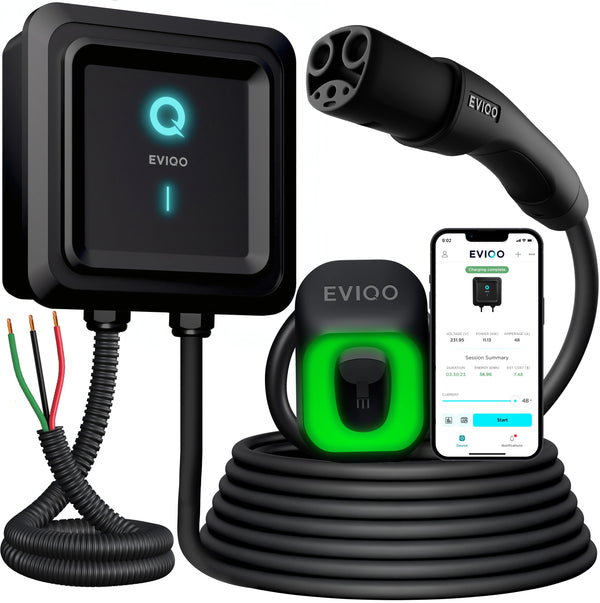
EVIQO NACS Level 2 EV Charger, 48A (50A Max), 240V, Hardwired, for Tesla EVs
$510.00
$429.99
SALE
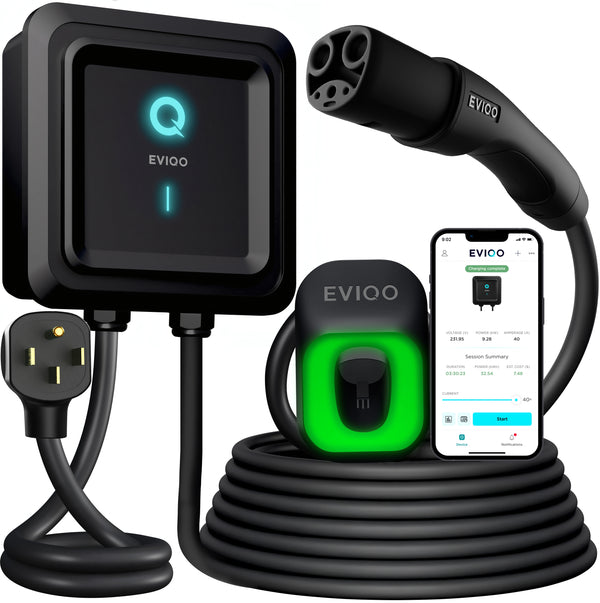
EVIQO NACS Level 2 EV Charger, 40A (9.6kW), 240V, NEMA 14-50 Plug In, for Tesla EVs
$510.00
$419.99
Why EVIQO

Built for everyday charging

  • Direct Tesla fit No J1772 adapter, no fumbling — just plug and charge
  • Future-proof for 2025+ EVs Compatible with Ford, GM, Hyundai, Kia, Rivian NACS rollouts
  • 40A plug-in or 48A hardwired Up to 11.5 kW — ~37–44 miles of range per hour
  • UL Compliant / ETL Listed Same safety certifications as every EVIQO charger
  • IP66 / NEMA 4 weatherproof Garage, carport, exterior wall
  • 3-year warranty Auto-activated at purchase
Side-by-side

Quick comparison

Model Install Type Default Amps Max Amps Speed Best For
Gen 2 NACS Plug-In
Tesla-Ready
Plug-In (NEMA 14-50) 40A 40A ~30–37 mi/hr Tesla owners
Gen 2 NACS Hardwired
Fastest Tesla Home Charge
Hardwired 48A 48A ~37–44 mi/hr Tesla / 2025+ EVs

Prices in USD. Free shipping in the contiguous U.S. All units ETL Listed, FCC certified, Energy Star qualified.

Buying guide

Which NACS Charger Is Right for You?

Does my EV use NACS?

Every Tesla (Model 3, Model Y, Model S, Model X, Cybertruck) uses NACS — that's the connector you see on Tesla Superchargers and at home. From 2025 onward, Ford (Mach-E, F-150 Lightning), GM (Blazer EV, Equinox EV, Silverado EV, Hummer EV, Lyriq), Hyundai (Ioniq 5, Ioniq 6, Kona Electric), Kia (EV6, EV9), Rivian (R1T, R1S), Honda (Prologue), and others started shipping with NACS ports natively. Check your car's charge port: NACS is the smaller, squarer-looking plug. If it has a rounder J1772 port, see our J1772 chargers instead.

Plug-in (40A) vs Hardwired (48A)

Plug-in NACS (40A / 9.6 kW): Install a NEMA 14-50 outlet on a 50A breaker, plug in, done. Most homes already have or can easily add this. Movable if you relocate. Adds ~30–37 miles per hour. Hardwired NACS (48A / 11.5 kW): Direct-wired to a 60A circuit. ~20% faster charging — ~37–44 miles per hour. Permanent install, cleanest look, no outlet to age. For most Tesla owners, plug-in 40A fully recharges 200–300 miles overnight. Choose hardwired if you have a long daily commute or a duo-EV household.

What about a Tesla Mobile Connector vs an EVIQO NACS charger?

The Tesla Mobile Connector that ships with new Teslas is 32A maximum and lacks WiFi, scheduling, household sharing, or weatherproofing. An EVIQO NACS charger delivers up to 48A (50% more power), has the EVIQO app for off-peak scheduling and cost tracking, and is rated IP66 / NEMA 4 for permanent outdoor mounting. Same connector — much more capability.

Will it work with my non-Tesla NACS EV?

Yes. NACS is now an open standard. Any EV equipped with a NACS port — including 2025+ Ford, GM, Hyundai, Kia, Rivian, Honda models — plugs directly into an EVIQO NACS charger. No adapter, no compatibility list. If the plug fits the port, it charges.

What if my next EV is J1772?

Most U.S. EVs are moving toward NACS, but if you switch back to a J1772-only car later, you can use any standard NACS-to-J1772 adapter — the same kind Tesla owners have used for years. We recommend keeping a $25–$40 adapter handy as a safety net. Better yet: install a hardwired NACS charger and a J1772 plug-in alongside it (we sell both).

Outdoor install on the side of a house — safe?

Yes. EVIQO NACS chargers are rated IP66 / NEMA 4 — protected against direct rain, snow, and hose spray. Operating range -22°F to 122°F. Just keep the holster height comfortable for the user (typically 42–48 inches from ground), and route the charging cable so it doesn't kink against the holster.

Explore more

Other ways to charge

FAQ

NACS EV Charger — FAQ

What is NACS?

NACS stands for North American Charging Standard. Originally developed by Tesla as the connector for Superchargers and Tesla home charging, it was opened up as a standard in 2022 and adopted by most major automakers starting in 2025. It's smaller and lighter than J1772, with the same safety and AC-charging capabilities.

Does it work with all Tesla models?

Yes — Model 3, Model Y, Model S, Model X, and Cybertruck all use NACS and connect directly to an EVIQO NACS charger. No Mobile Connector or adapter needed.

Which non-Tesla EVs have NACS?

As of 2025–2026: Ford Mustang Mach-E, F-150 Lightning; GM Blazer EV, Equinox EV, Silverado EV, Hummer EV, Lyriq, Sierra EV; Hyundai Ioniq 5, Ioniq 6, Kona Electric (refresh); Kia EV6, EV9; Rivian R1T, R1S; Honda Prologue; Acura ZDX; Polestar 3, 4; Volvo EX90; Subaru Solterra (refresh); Toyota bZ4X (refresh). Check your specific model year — most 2025+ MY EVs from these brands ship NACS natively.

How much faster is a NACS hardwired vs plug-in?

Hardwired NACS runs at 48A / 11.5 kW; plug-in NACS runs at 40A / 9.6 kW. Hardwired charges about 20% faster — ~37–44 vs ~30–37 miles of range per hour. For overnight charging on most EVs, both fully replenish a day's driving.

Can I install the plug-in version myself?

If you already have a NEMA 14-50 outlet on a dedicated 50A circuit — yes, plug it in and you're done. If you need the outlet installed, hire a licensed electrician (~$300–$800 typical install). For hardwired, electrician is required.

What if I get a non-NACS EV later?

Use a NACS-to-J1772 adapter (sold separately, $25–$40). Same idea as Tesla owners using J1772-to-Tesla adapters for years. Or buy a second EVIQO J1772 charger — many duo-EV households do this.

Is it rebate-eligible?

Yes. EVIQO NACS chargers are ETL Listed, UL Compliant, FCC certified, and Energy Star qualified — the certifications most utility and state programs require. Federal tax credit (up to 30%, capped) and many state/utility rebates apply. Check eviqo.io/pages/rebates for current programs by ZIP.

Does it support Tesla's Powershare or V2L?

Not currently. EVIQO Level 2 chargers are AC charging stations — they deliver power TO the EV. Vehicle-to-load (V2L) and vehicle-to-home (V2H) features depend on the EV and a specialized bidirectional charger, which is a different product category.

WiFi requirements?

EVIQO chargers connect to 2.4 GHz WiFi only (most home routers broadcast both 2.4 and 5 GHz simultaneously — make sure your phone is on the 2.4 GHz SSID during setup). Once paired, the charger uses WiFi for scheduling, monitoring, OTA firmware, and household sharing.

Outdoor rating?

IP66 and NEMA 4 — protected from dust ingress and direct water jets. Tested for -22°F to 122°F. Mount on garage wall, exterior wall, or carport. Just keep the holster within cable reach of the EV's charge port (NACS is typically driver-side rear-left on Teslas).